You’ve probably walked past several of NYC’s most stunning botanical hideaways without realizing they existed.
While tourists crowd Central Park and the Brooklyn Botanic Garden, locals who know where to look have discovered seventeen serene green spaces tucked into unlikely corners of the city.
These aren’t your typical parks, they’re carefully curated gardens with unique plant collections, hidden waterfalls, and medieval herb beds that transport you centuries away from the surrounding concrete.
Here’s where they’re hiding.
Key Takeaways
- NYC offers hidden botanical gems beyond Central Park, including medieval-inspired gardens, floating parks, and community-maintained urban oases throughout all boroughs.
- Pocket parks like Paley Park and Greenacre Park feature dramatic waterfalls that create tranquil sanctuaries by masking city traffic noise.
- Community gardens such as 6BC Botanical and El Jardin Del Paraiso transformed vacant lots into sustainable green spaces with unique features.
- Historic sites like The Cloisters and Heather Gardens combine botanical collections with cultural significance and stunning Hudson River panoramas.
- Innovative spaces including Little Island and The Elevated Acre provide accessible waterfront experiences with amphitheaters and diverse plant collections.
Alpine & Heather Gardens at Fort Tryon Park
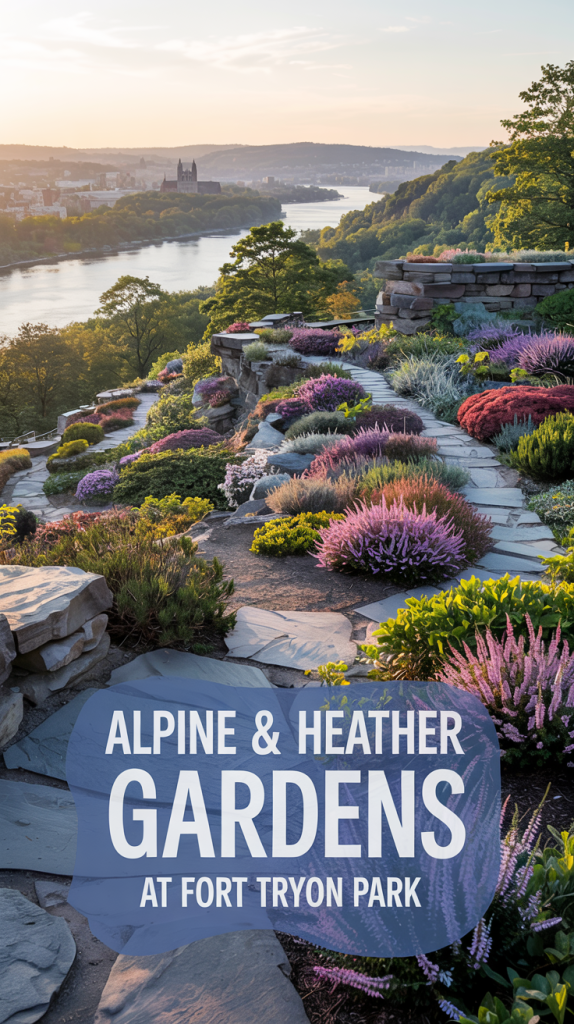
Perched on a dramatic rocky ridge in northern Manhattan, the Heather and Alpine Gardens at Fort Tryon Park represent one of the city’s most spectacular yet underappreciated botanical destinations.
Designed by the Olmsted Brothers in 1935, these three-acre gardens showcase over 500 plant varieties across terraced slopes, offering panoramic Hudson River views while supporting diverse pollinators through carefully curated heathers, perennials, and flowering shrubs.
The Alpine Garden stands as the region’s first public alpine garden, featuring intricately woven pathways through rock outcrops that transform steep terrain into an accessible landscape connecting Broadway to The Met Cloisters.
The Cloisters Medieval Gardens
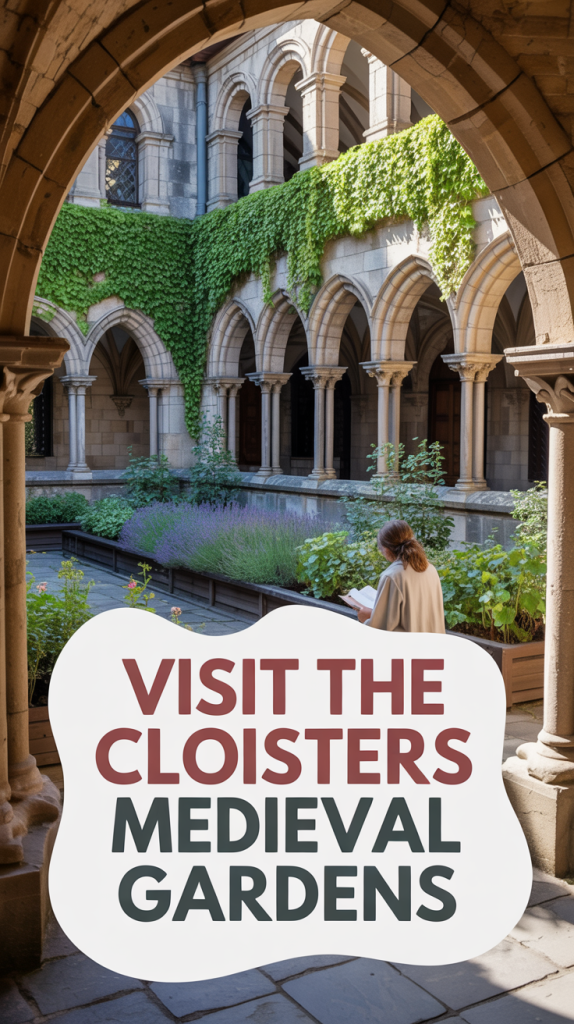

Within the same northern Manhattan parkland, The Cloisters offers a distinctly different botanical experience that transports visitors to medieval Europe.
This Metropolitan Museum of Art branch features three gardens with over 250 plant genera inspired by medieval manuscripts.
Each species is chosen for its historical authenticity and symbolic significance, recreating the contemplative monastic gardens that provided spiritual refreshment centuries ago.
The museum itself incorporates four distinct cloisters from French monasteries: Cuxa, Saint-Guilhem, Bonnefont, and Trie-sur-Baïse, creating an authentic architectural framework for these living collections.
Paley Park’s Urban Waterfall Oasis
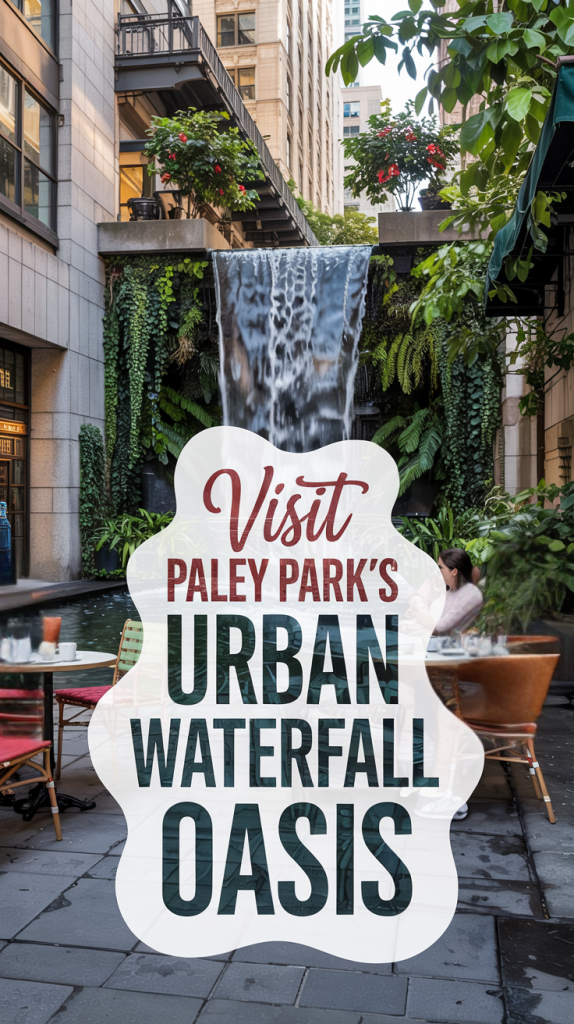

How can a mere 4,200 square feet transform into one of Manhattan’s most visited refuges?
Paley Park’s 20-foot waterfall, cascading at 1,800 gallons per minute, creates white noise that masks traffic sounds while generating air-purifying negative ions.
You’ll find movable Bertoia chairs beneath honey locust trees, ivy-covered walls, and strategic lighting that illuminates the waterfalls textures after dark.
The park’s simple spatial organization and light wire mesh furniture make it exceptionally accessible, with wheelchair ramps flanking the entrance steps.
The Elevated Acre Above the Financial District
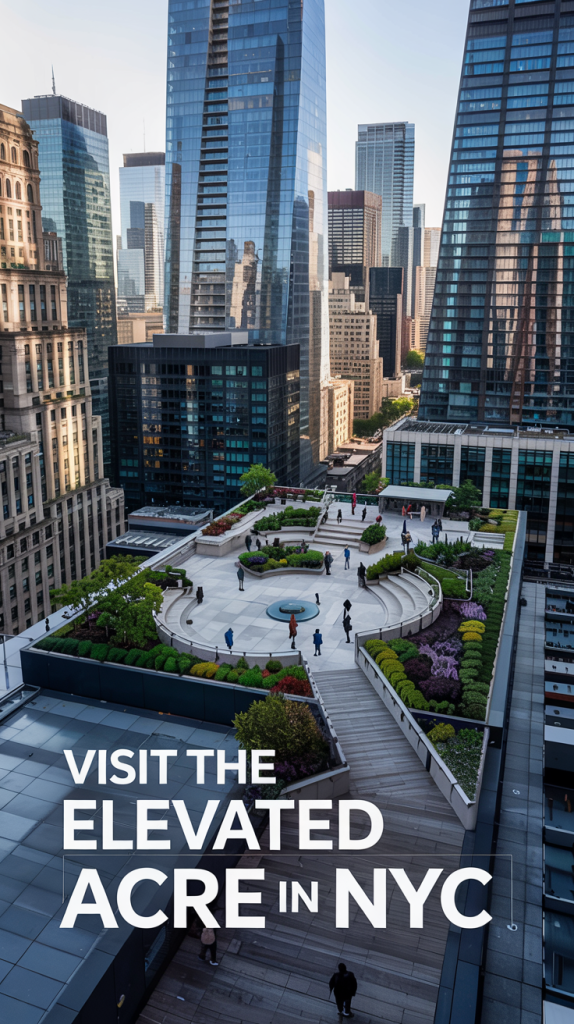
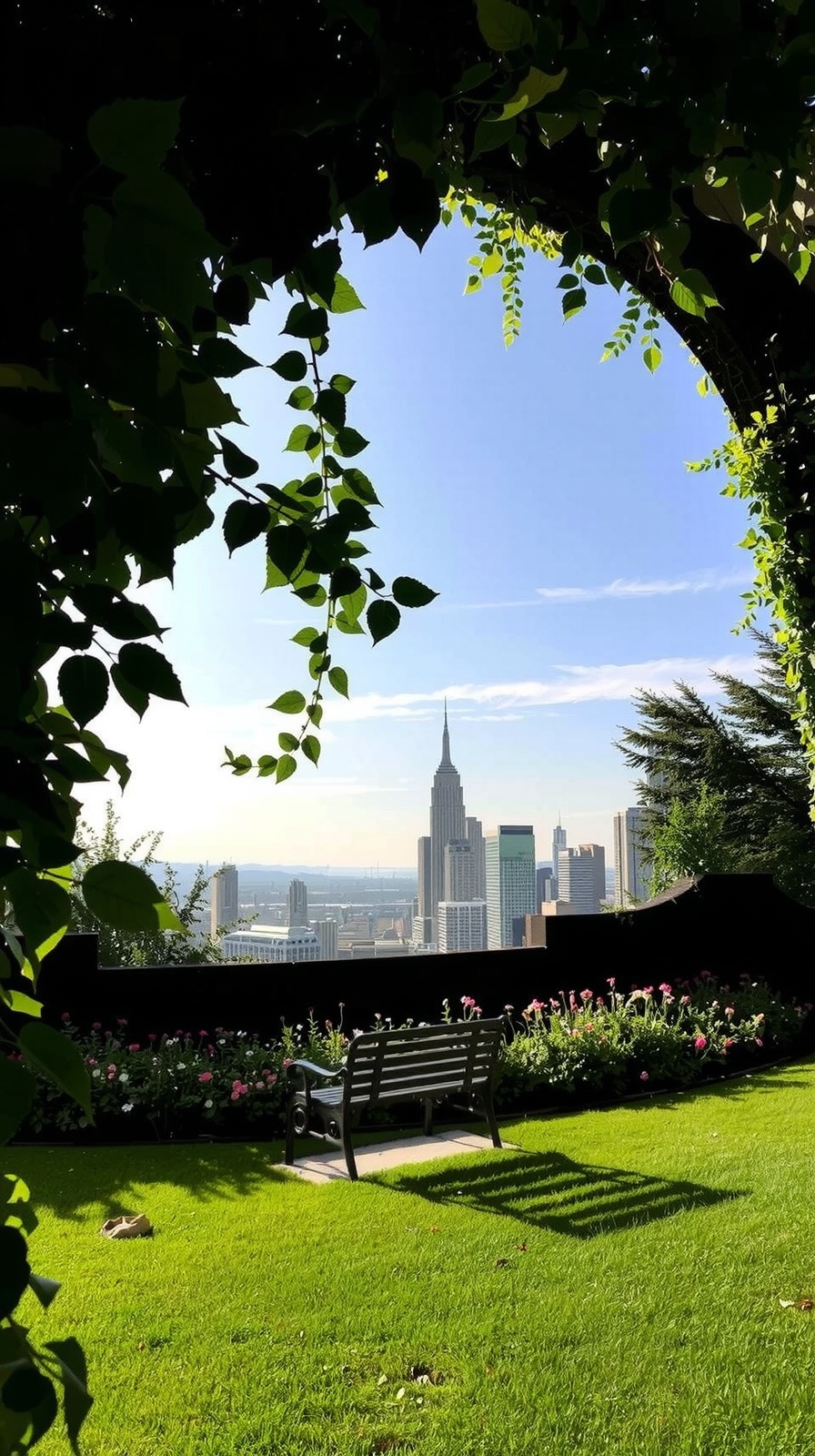
Rising thirty feet above Water Street’s canyon of skyscrapers, the Elevated Acre delivers something the Financial District critically lacks: an open lawn where you can actually sink your feet into real grass.
Accessible via escalators at 55 Water Street, this renovated plaza features an amphitheater, summer beer garden, and sweeping views of the Brooklyn Bridge and East River, all while remaining remarkably unknown.
Winding paths of Brazilian hardwood connect the thoughtfully designed gardens and plantings throughout the space.
Greenacre Park in Midtown East
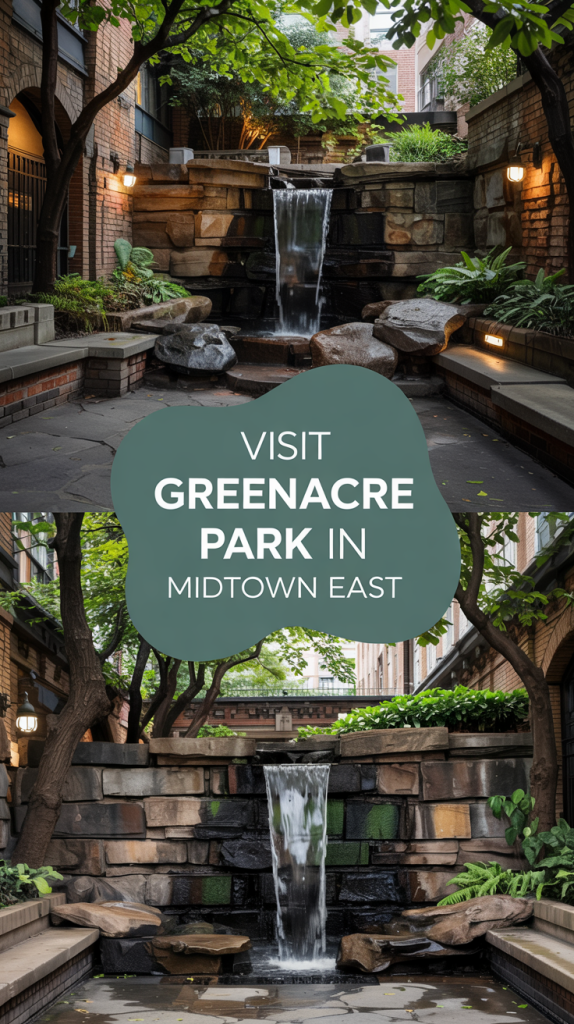
Tucked between Second and Third Avenues on East 51st Street, Greenacre Park transforms a mere 6,000 square feet into one of Midtown’s most sophisticated retreats.
You’ll find a 25-foot waterfall cascading over natural rock formations, creating an auditory buffer against city noise.
Multi-level terraces, honey locust trees, and movable seating craft an intimate sanctuary, proving pocket parks can deliver complexity within compact urban spaces.
Officially opened in October 1971, this serene retreat was established by Abby Rockefeller Mauzé through the Greenacre Foundation to provide a calm respite from the city’s relentless energy.
6BC Botanical Garden in the East Village
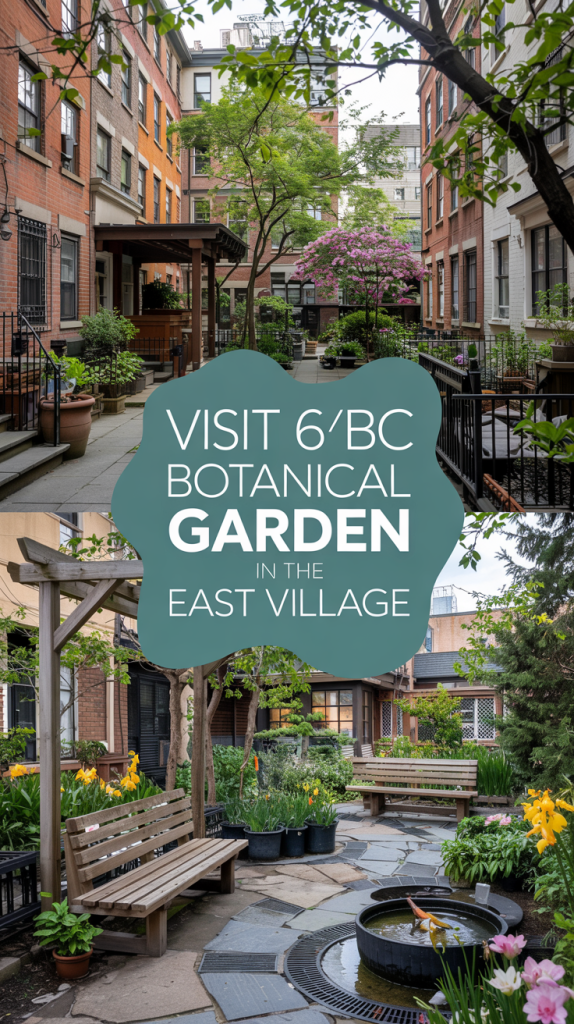
While most visitors seek Manhattan’s famous green spaces, 6BC Botanical Garden offers something rarer: a living proof of community activism where native species and immigrant plants thrive side by side on what was once abandoned land.
You’ll find this East Village sanctuary at 624 East 6th Street, open seasonally from April through October.
The garden features sustainable projects, including solar power and composting systems. At its heart lies a Japanese-style arbor and koi pond, built in the late 1980s as the space transitioned from individual plots to a collective garden.
11th Street Garden Among the Brownstones
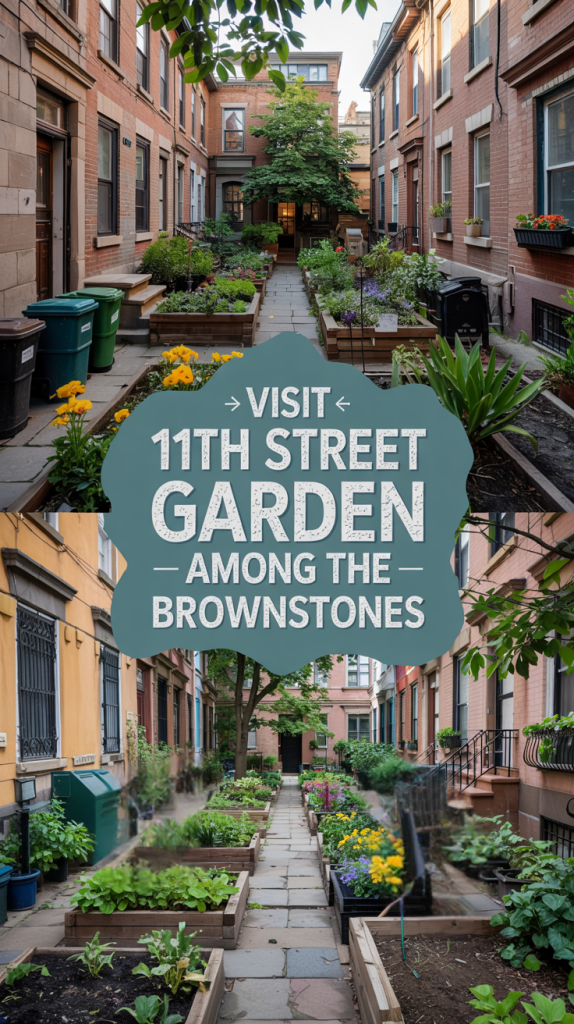
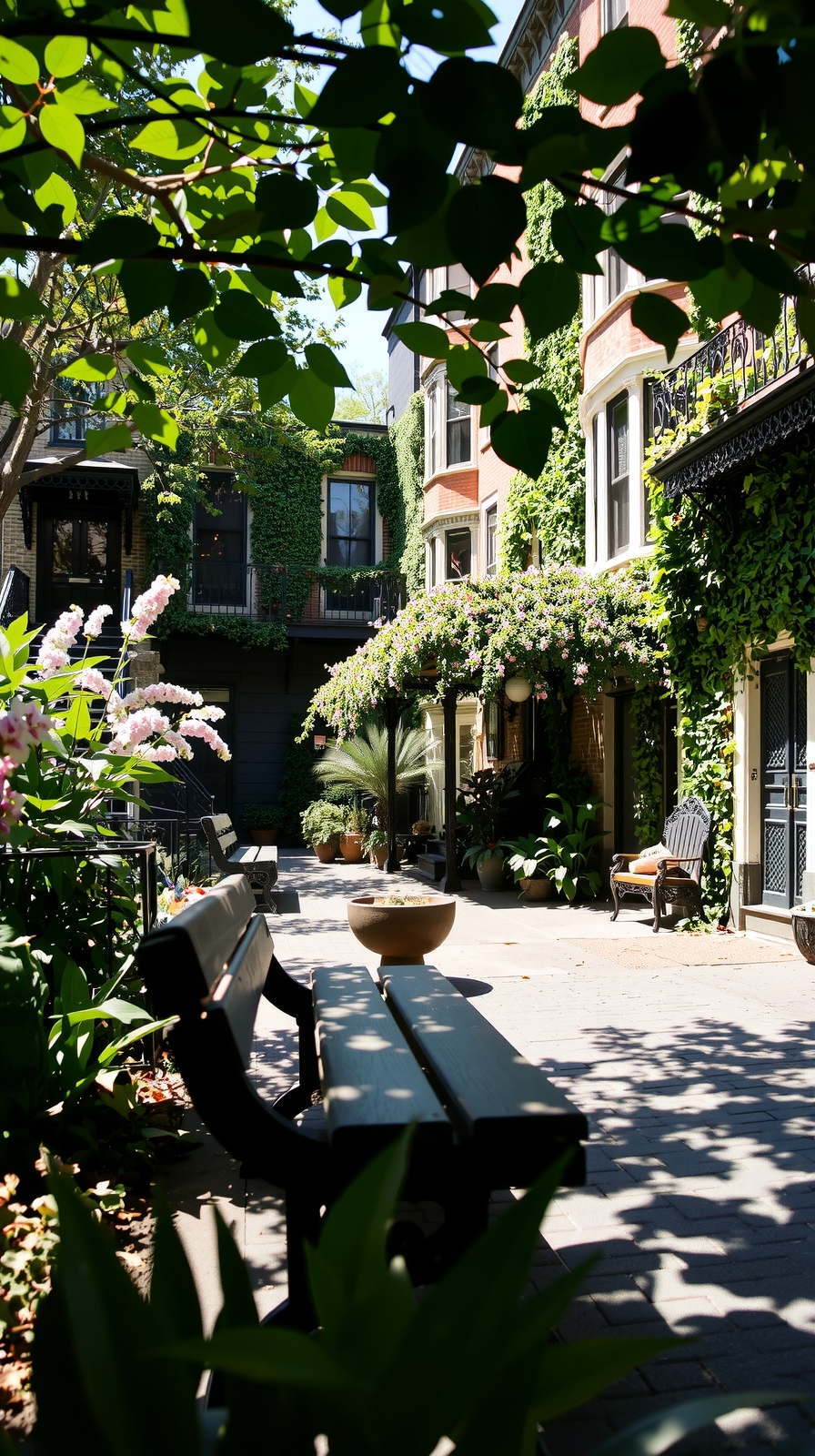
Among Manhattan’s historic brownstone blocks, West 87th Street Garden stands as a symbol of neighborhood resilience, occupying land where two brownstones once stood before community members transformed the vacant lot into a thriving green space.
You’ll find volunteer-maintained flower beds, sustainable composting systems, and regular workshops that strengthen community bonds.
This garden demonstrates how urban renewal projects can preserve neighborhood character while creating essential gathering spaces.
Unlike public parks, many of the city’s most tranquil gardens remain hidden from street view behind brownstone facades, accessible only to residents who enter through their back doors.
La Plaza Cultural in Alphabet City
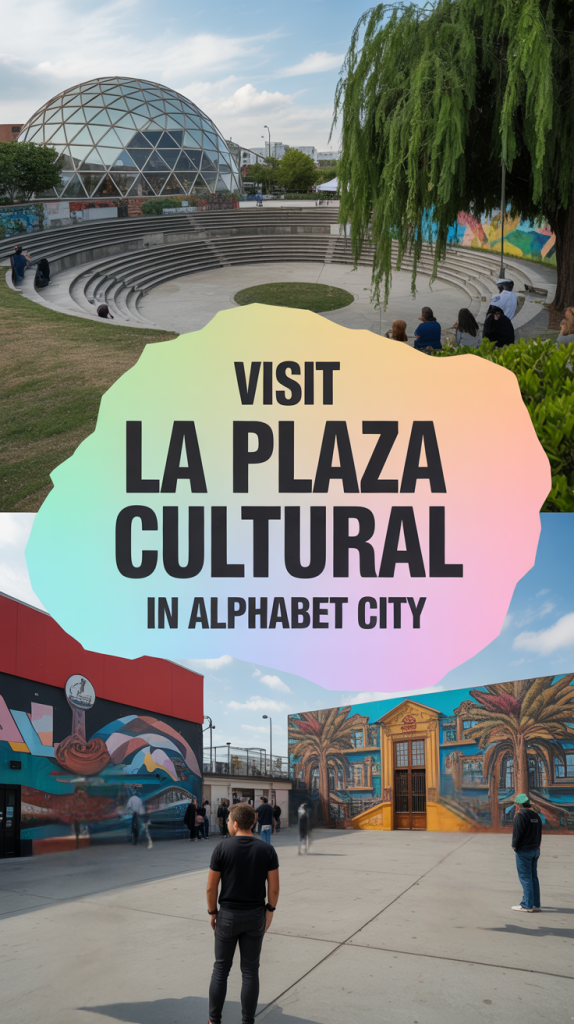
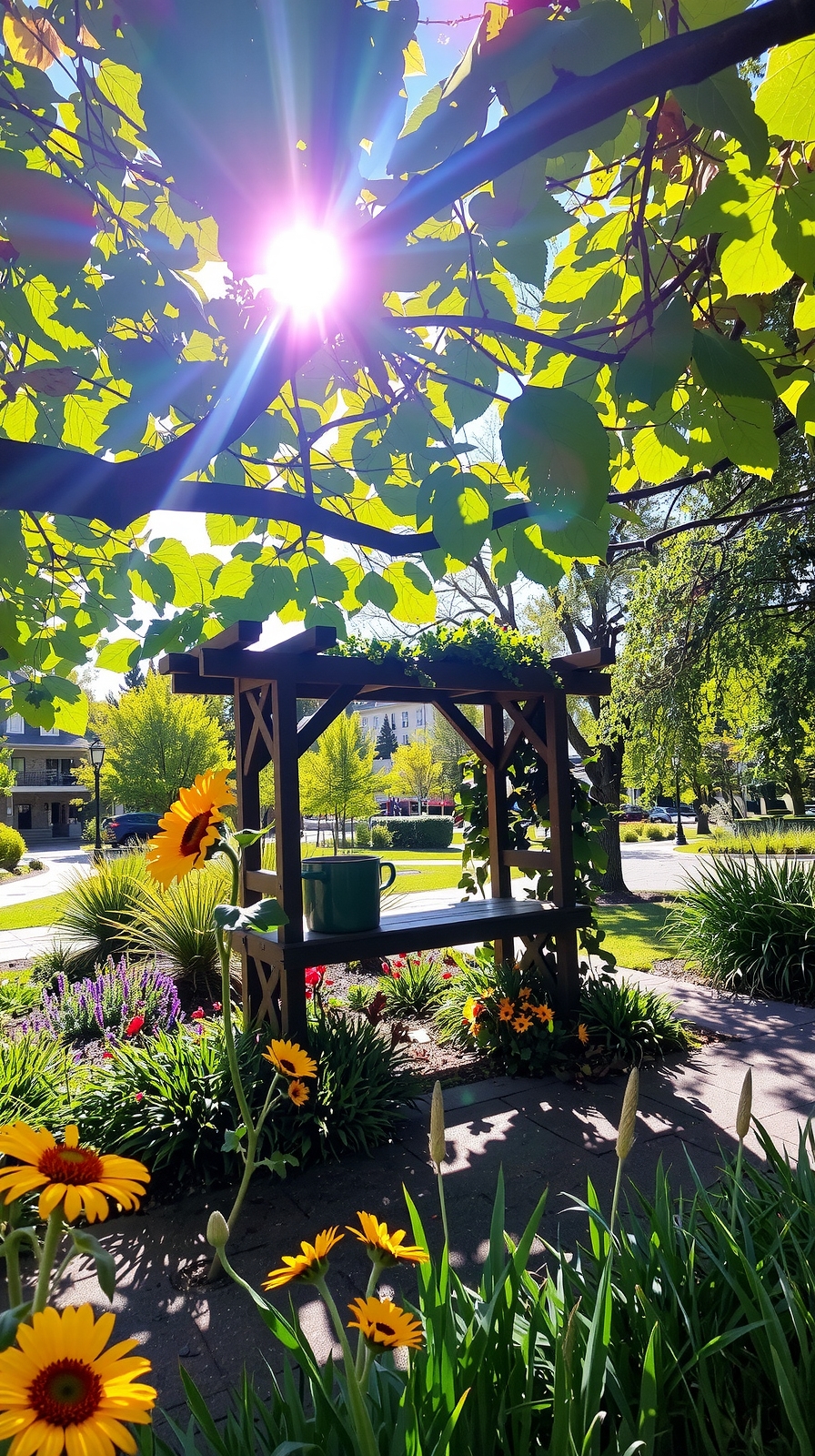
Manhattan’s Lower East Side tells a different story of urban transformation, where La Plaza Cultural emerged from the rubble of 1970s urban decay to become one of Alphabet City’s most vibrant community spaces.
You’ll find a geodesic dome and amphitheater built by visionaries like Buckminster Fuller and Gordon Matta-Clark, where locals host cultural events and environmental education programs beneath weeping willows planted by Green Guerillas founder Liz Christy.
Jane Street Garden’s Hidden Retreat

Tucked away on a quiet West Village block, Jane Street Garden has served as a demonstration of community resilience since 1973, when neighbors transformed a burned-out lot at 40 Jane Street into one of New York City’s pioneering green spaces.
You’ll find benches nestled among diverse plantings, where organic practices support local wildlife.
Open mid-April through October, it’s managed through GreenThumb’s program, welcoming visitors seven days weekly.
El Jardin Del Paraiso on the Lower East Side
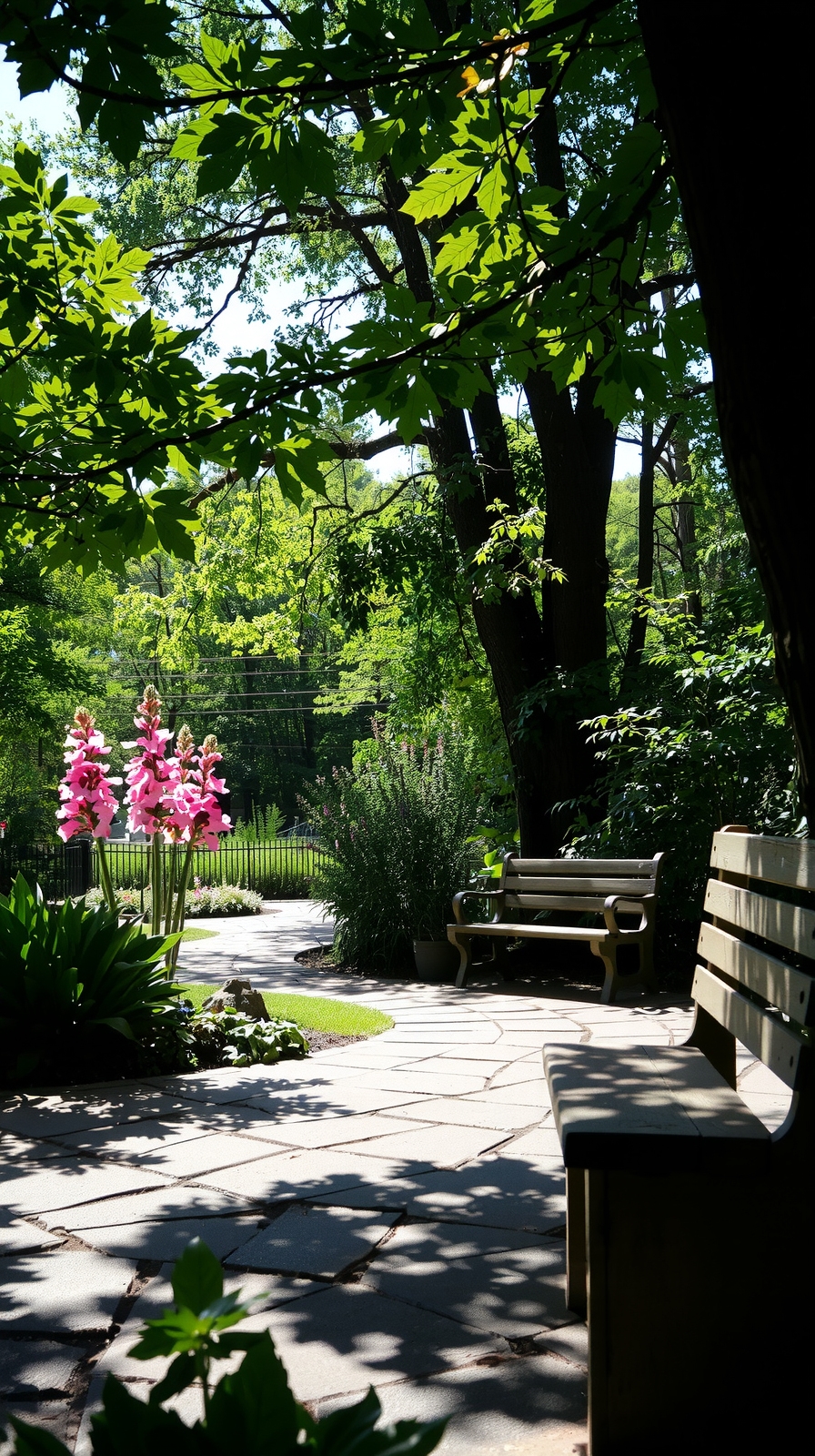
Since 1981, El Jardin Del Paraiso has transformed nine contiguous city-owned lots into a three-quarter-acre oasis at 710 East 5th Street, offering one of the Lower East Side’s most creative community garden experiences.
You’ll find birch trees, weeping willows, and a turtle-inhabited pond creating a self-contained ecosystem.
The highlight is Roderick Romero’s octagonal treehouse surrounding a willow tree accessible Tuesday through Sunday from 10 am to dusk.
Little Island on the Hudson River
While community gardens like El Jardin Del Paraiso offer intimate green spaces carved from urban lots, Little Island presents an entirely different vision of botanical escape, a 2.4-acre public park that literally floats above the Hudson River on 132 massive concrete tulip-shaped supports.
Rising from Pier 54’s ruins, this $363 million project features 35 tree species, 65 shrub varieties, and over 66,000 seasonal bulbs across varied topography with winding paths and scenic overlooks.
Roosevelt Island Smallpox Memorial Garden
At the southern tip of Roosevelt Island, the Gothic Revival ruins of the former Smallpox Hospital stand as a haunting monument to 19th century public health crises.
Designed by James Renwick Jr. in 1856, the stabilized structure now anchors plans for “Wild Gardens, Green Rooms,” a memorial park honoring medical professionals.
You’ll find this federally registered landmark dramatically lit at night, overlooking the East River.
Governors Island’s Car-Free Gardens
Just a short ferry ride from Lower Manhattan, Governors Island offers 172 acres of car-free exploration where bicycles and pedestrians reign supreme.
You’ll find seven miles of peaceful paths winding through gardens like The Hills and Hammock Grove, perfect for picnicking and lawn games.
Round-trip ferry access costs around $5 with bike rentals available on-island for exploring this tranquil urban escape.
DUMBO Waterfront Gardens
Nestled between the Manhattan and Brooklyn Bridges, DUMBO’s waterfront gardens transform a historic industrial district into one of Brooklyn’s most picturesque botanical destinations.
You’ll find diverse spring blooms including cherry blossoms and magnolias along the East River, while the 8,000-square-foot Max Family Garden offers winding pathways and stone benches.
These spaces blend cobblestone streets with native plantings that support urban wildlife and provide stunning skyline views.
Central Park’s Conservatory Garden
A remarkable transformation took place in 1937 when Central Park’s six-acre Conservatory Garden emerged from the ruins of a demolished Victorian glasshouse.
You’ll find three distinct European garden styles here: an Italianate center with wisteria-covered pergolas, a French north garden featuring the Untermyer Fountain, and an English south garden surrounding the Burnett Fountain.
Enter through the ornate Vanderbilt Gate at Fifth Avenue and 105th Street.
Fort Washington Park Gardens Along the Hudson
Stretching 160 acres along the Hudson River from 155th Street to Dyckman Street, Fort Washington Park offers a different kind of botanical experience than its manicured counterparts elsewhere in Manhattan.
You’ll find restored natural landscapes alongside riverside greenways, where Bette Midler’s New York Restoration Project transformed neglected grounds into thriving green spaces.
The park’s ecological restoration blends native plantings with recreational paths, and stunning Palisades views.
LuEsther T. Mertz Library’s Botanical Archives
Hidden within the New York Botanical Garden’s grounds, the LuEsther T. Mertz Library houses over 800,000 botanical items and three thousand linear feet of archives.
Founded in 1899 as America’s first dedicated botanical research library, it preserves rare manuscripts, field notebooks, and correspondence from prominent botanists.
You can access digital collections online, or schedule appointments to explore physical archives documenting over a century of American botanical science.
Conclusion
You’ve discovered NYC’s best-kept secrets, botanical havens hiding in plain sight throughout the five boroughs. These green spaces prove you don’t need to escape the city to find your slice of paradise.
Whether you’re seeking a moment of meditation, a photography backdrop, or simply a refreshing change of scenery, these gardens deliver.
Don’t let the grass grow under your feet, start exploring these urban oases today and reconnect with nature.