
Imagine a world without the familiar sight of SUVs on every corner – hard to picture, isn’t it? Today, these versatile giants rule the roads, offering the perfect blend of style, space, and comfort that has captured the hearts of drivers worldwide. But where did it all begin? How did the SUV evolve from a niche vehicle to a global sensation?
Believe it or not, the story of the SUV stretches back much further than you might think, and it’s a tale of innovation, adventure, and the relentless pursuit of the ultimate driving experience. Buckle up as we take a thrilling ride through the history of the Sports Utility Vehicle and uncover the iconic models that drove us into the age of the SUV.
Chevrolet Suburban Task Force

It is incredible that the Suburban nameplate has been around since the late 30s, and it was always some kind of people carrier on the truck chassis. But in the 50s, the Suburban became a forebearer of the SUV idea. With the introduction of the legendary “Task Force” generation, the Suburban got a new body style, more comfort and features, an optional V8 engine, and an all-wheel drive. This made it a proper Sports Utility Vehicle since it could carry six passengers, had massive trunk space, and could go pretty much anywhere. It is very similar to today’s modern Suburban.
Willys Jeep Station Wagon
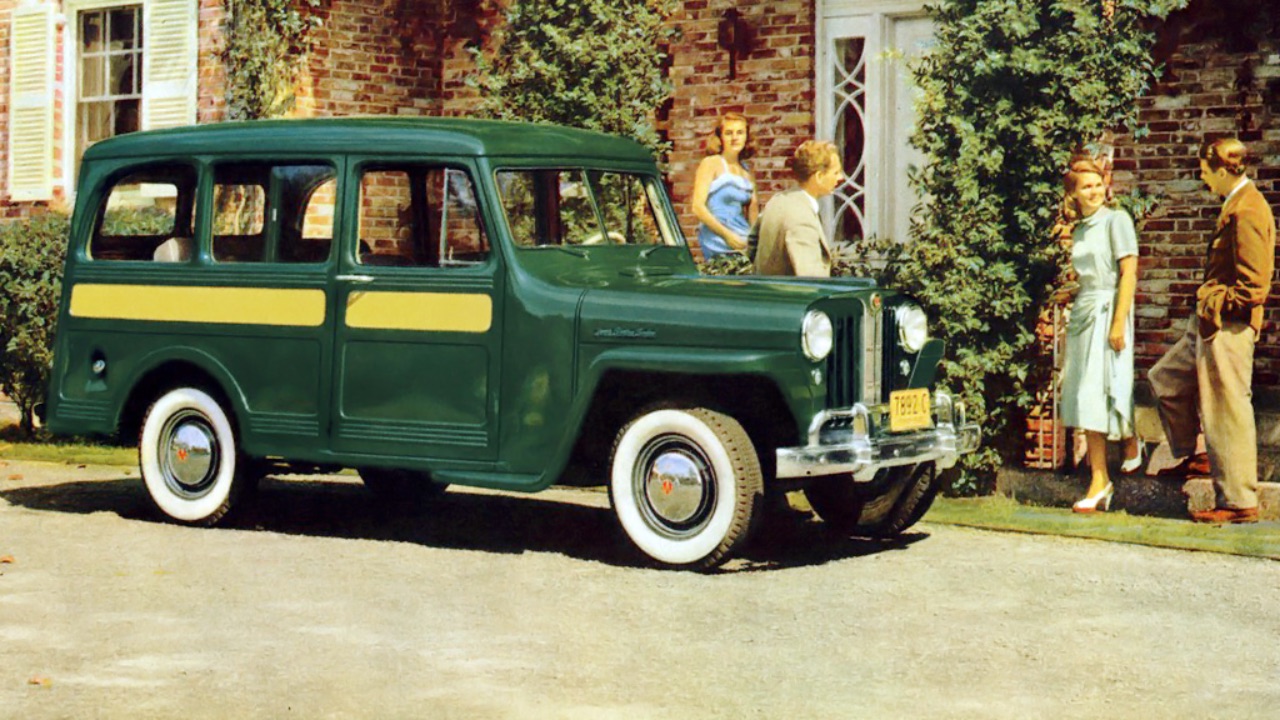
Introduced just after World War II, the Willys Station or Utility Wagon was a testament to the pioneering spirit of its time. It combined the rugged mechanics of a military Jeep with a wagon body style, reasonable comfort, and practicality. This innovative blend and an optional all-wheel-drive laid the foundation for future SUV models. The Willys Jeep Station Wagon’s popularity and global export marked a significant transition for Jeep from military production to civilian off-road vehicles.
International Travelall
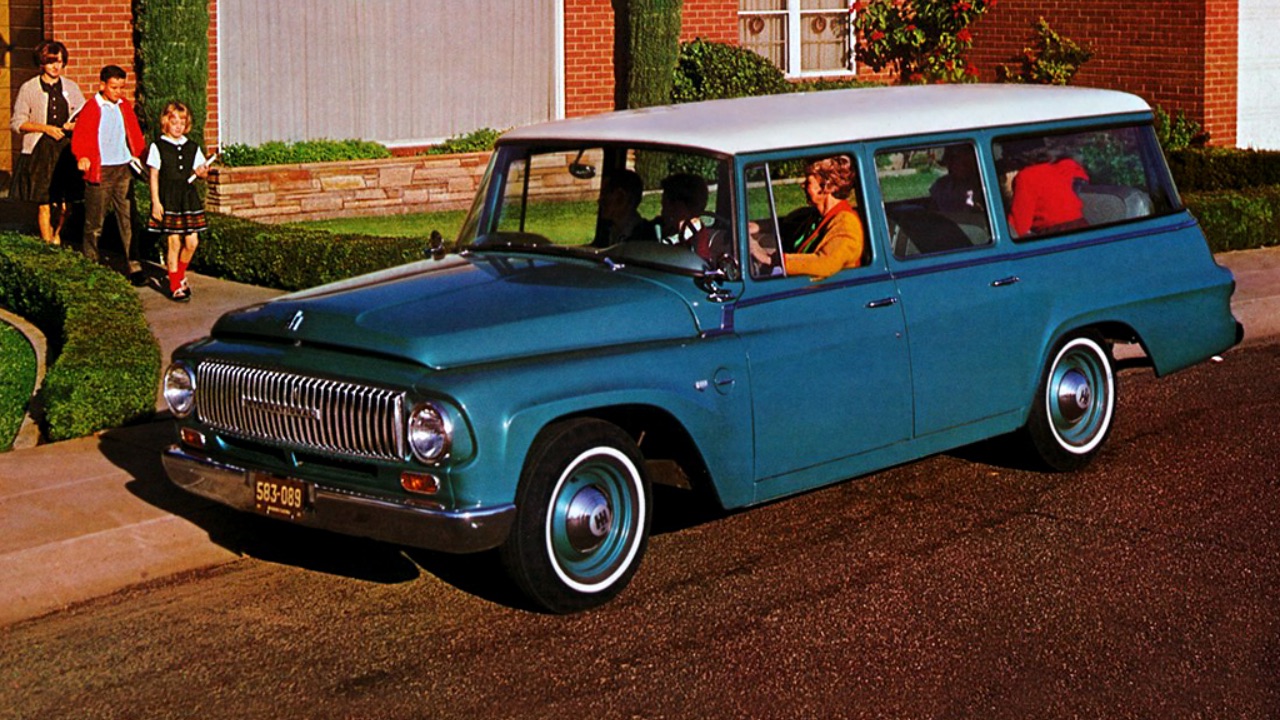
Realizing that there is significant potential in sturdy, all-wheel-drive station wagons, International introduced the Travelall model in the early 50s. However, in its third generation (1961 to 1969), the Travelall really evolved into a proper SUV. It was a massive 5-door wagon with room for six passengers, plenty of space, a tough pickup truck chassis, and a long list of optional engines. The Travelall was a bit more expensive, but it was a very dependable and tough machine that was a favorite with construction workers and remote services for its all-terrain capability and quality.
Jeep Wagoneer
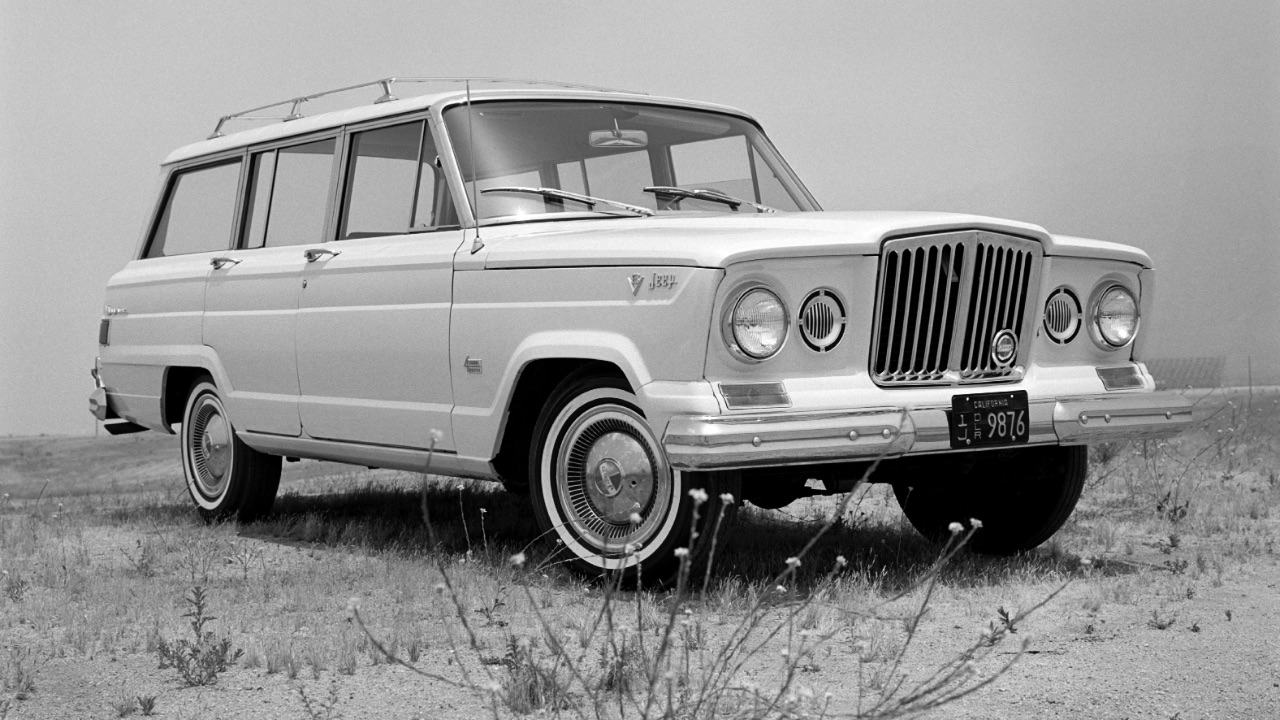
Most car historians claim that the 1963 Jeep Wagoneer is the first proper SUV in the world. This could be true since the Jeep specifically engineered Wagoneer to combine the practicality of the station wagon, comfort, and features of a family sedan with the ruggedness and off-road capabilities found in Jeep vehicles. The combination worked perfectly, and Wagoneer soon had a cult following and buyers that kept Jeep in business for decades. Amazingly, the last of those original Wagoneer (or Grand Wagoneer) models left the factory in 1990 after almost three decades on the market.
Ford Bronco

Although Ford used the Scout’s idea, it elevated it further with the 1966 Bronco. Built on a compact chassis with numerous features and even a Roadster option (fold-down windshield), the Bronco was an instant hit and remained in production for 30 years. It was a very inexpensive but dependable compact SUV that could be had with powerful V8 engines. Some say that Bronco singlehandedly created the off-road community in the US, and it even had a remarkable racing career. It is an immensely influential compact SUV, and it is no wonder that Ford decided to resurrect Bronco for the 2021 model year.
Jeepster Commando
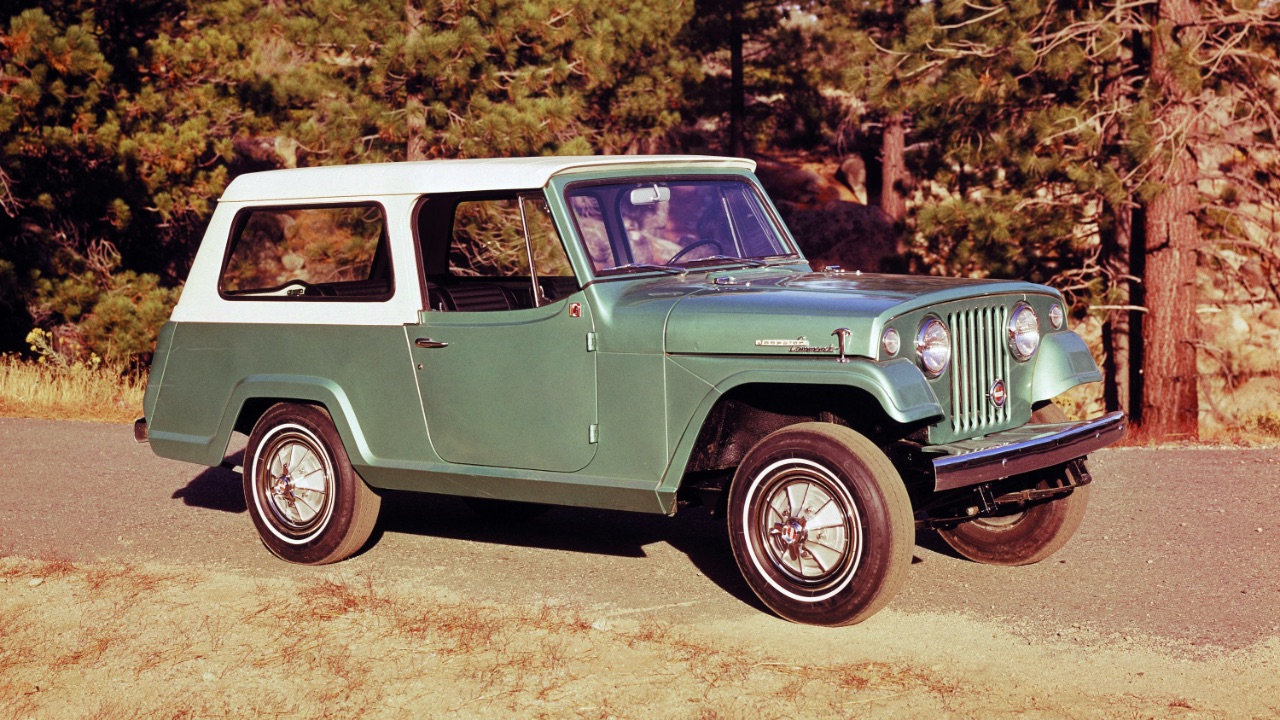
This forgotten Jeep was one of the forerunners of the SUV class with its upscale features, powerful engines, and more comfortable interior. Introduced in 1966, Jeep answered the criticisms that its CJ5 range was too rugged, uncomfortable, and had to live with. The Jeepster Commando didn’t only come with a new name but a longer list of options and features and fought hard with International Scout and Ford Bronco for the title of the best compact SUV on the market.
Chevrolet Blazer

Chevrolet might have been a little late to the compact SUV market with the 1969 Blazer, but it set new standards in class when this model arrived. Built on a shortened truck chassis, this model inherited a rugged all-wheel-drive system, powerful V8 engines, and a long list of options, making it an instant hit. The Blazer and its GMC cousins were among the most popular models in the off-road segment for years to come and are still one of the most sought-after classic SUVs.
Land Rover Series I Wagon
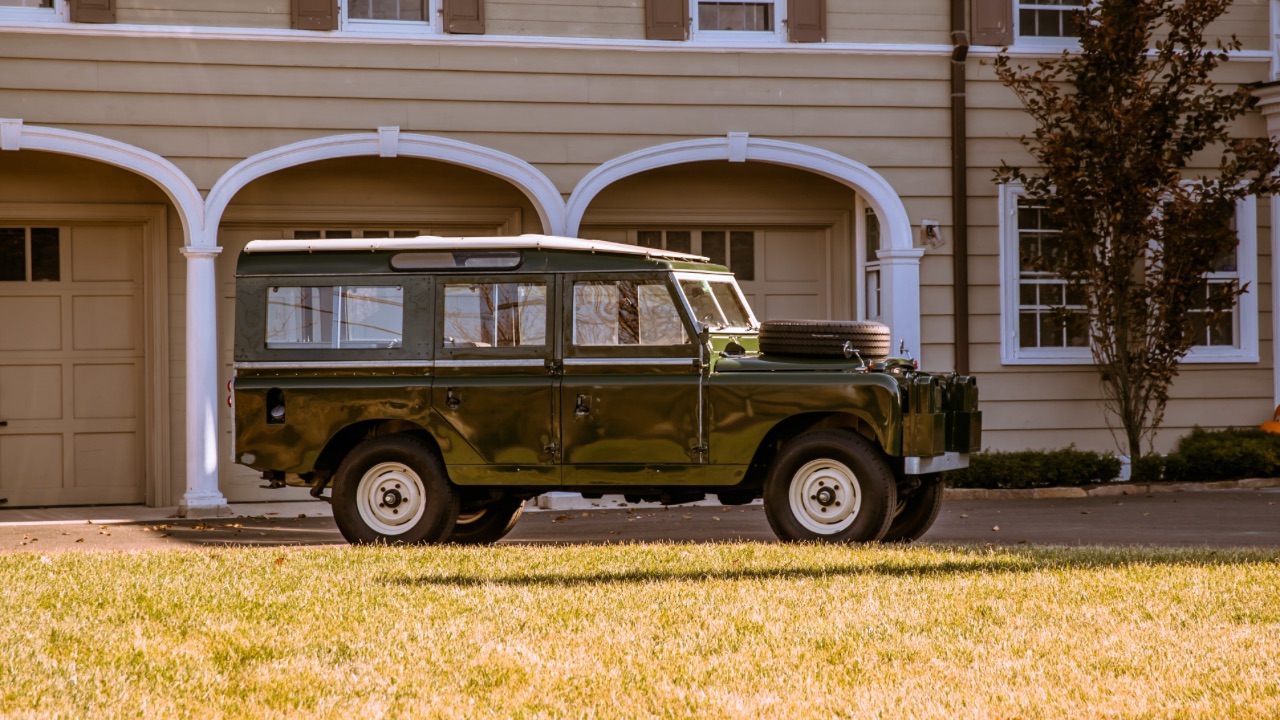
The Land Rover debuted in 1948 as an innovative, all-aluminum body off-road model with incredible capabilities. However, in the late 50s, the Series I got a five-door wagon body and offered some comfort. Primarily a military vehicle, the Series I Wagon was used as a dependable workhorse worldwide. Still, the popularity of this body style and the constant evolution of the form influenced Land Rover’s engineers and designers. Over the years, the Series I evolved into Series II, III, and Defender models and remained a tough but loveable SUV.
Range Rover
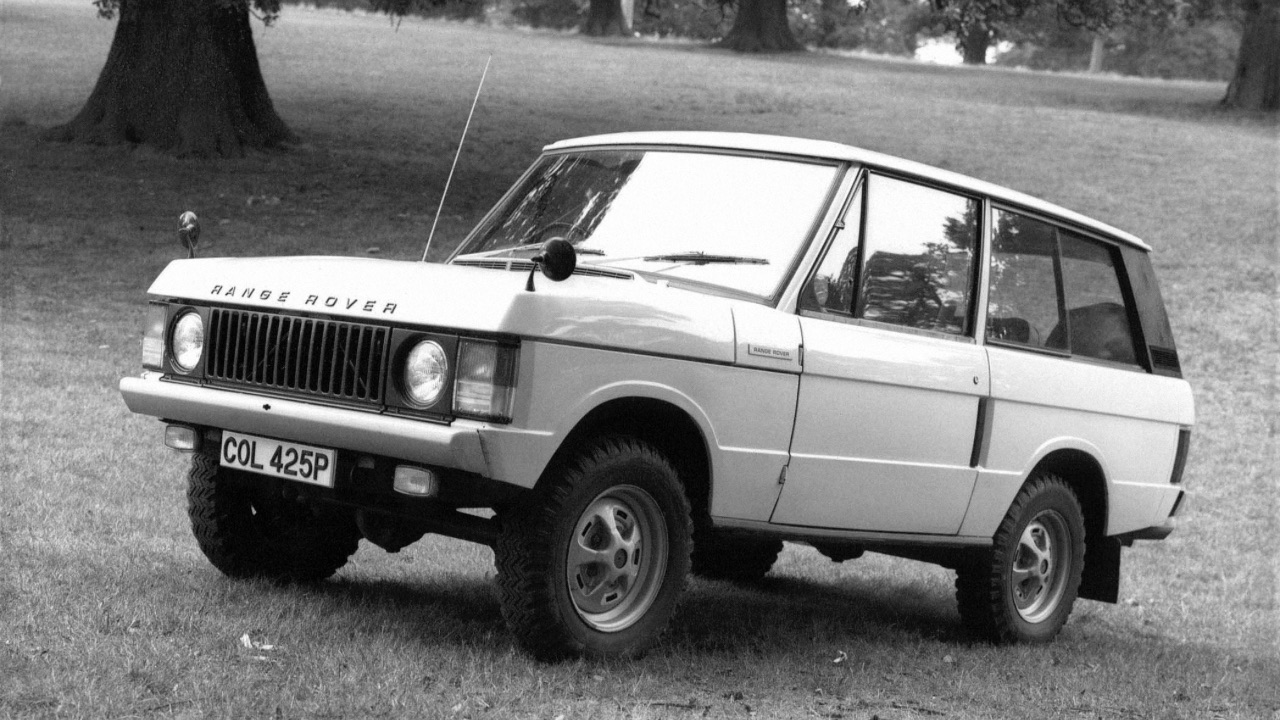
Introduced in 1970, the Range Rover was the first luxury SUV ever made. It combined the off-road capabilities of the Land Rover models with a plush interior, a modern but timeless design, and a 3.5-liter Rover V8 engine. It was an instant hit used equally as a luxury cruiser for jumping the sand dunes. The Range Rover proved very influential as a model and is still in production over half a century later. The original models remained in demand by collectors as bona fide classic cars.
Toyota Land Cruiser FJ40

The Land Cruiser debuted in the early 50s as a no-frills, off-road rig for various purposes. But, the FJ40 model put Toyota on the SUV map when it was released in the early ’60s. This highly dependable, easy-to-use, off-road-capable model was sold in numerous versions and became famous worldwide. It could be a two- or four-door version, as a pickup or station wagon, with multiple options and engines. The versatility, signature qualities, and Toyota build quality promoted this model and kept the Toyota on the SUV path towards the current models.
Toyota 4Runner

Toyota was a brand name in the emerging SUV market when it introduced the 4Runner in the mid-80s. The idea was brilliant: Offer a smaller, more colorful, and easier-to-use model compared to full-size Land Cruisers and FJs and attract younger, more active buyers who will appreciate the capability and coolness of this model. It worked perfectly, creating an SUV legend that is still going strong and influencing numerous other brands to do the same, creating a solid market.
Jeep Cherokee XJ
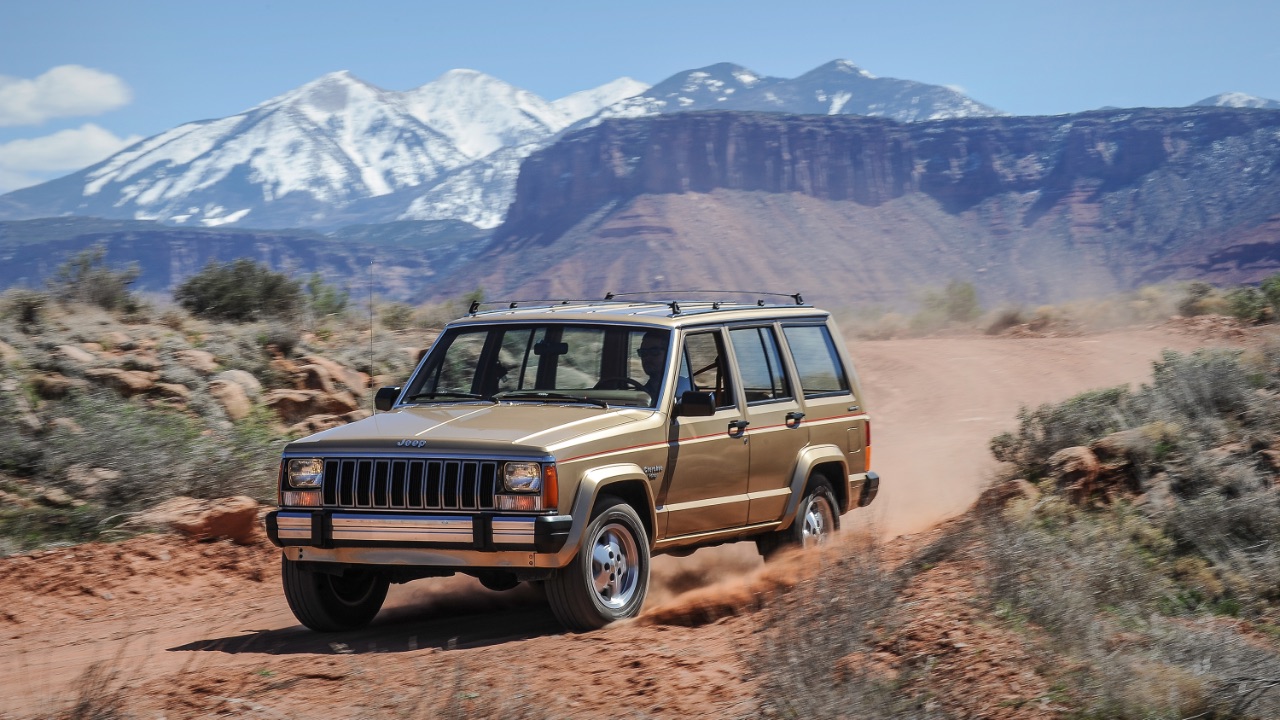
Just as the Jeep invented the SUV class in 1963 with the Wagoneer, it did it again in the early 80s with the Cherokee XJ. It was a modern-looking, very practical, efficient, and capable SUV that resonated perfectly with the 80s suburban families and was an ideal family hauler with plenty of features and versions. It redefined the essence of what the modern SUV should be and became very successful, selling millions. Also, it didn’t compromise its off-road heritage and was still more than capable on the trail: a true modern classic and one of the main reasons for today’s SUV popularity.
Lamborghini LM002
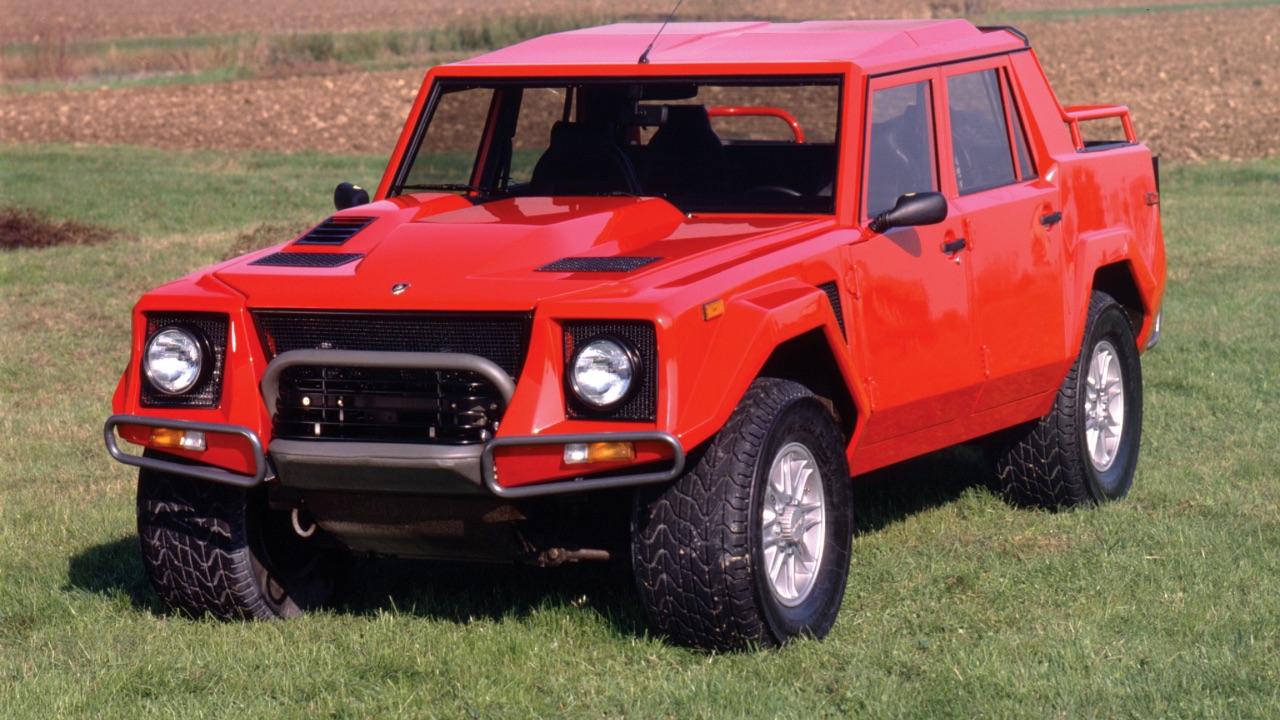
You might think that high-performance SUVs are the 21st-century thing, but you’re mistaken. As contradictory as it is, combining stellar performance with off-road capabilities was invented in the mid-80s when Lamborghini introduced the insane LM002. Powered by a V12 engine from a Countach supercar, the LM002 was a luxury off-road monster with a plush interior, a small truck bed, and crazy performance. It was also extremely expensive, and Pirelli made a tire just for it since no other commercial tire could handle the power and requirements. Even though it was produced in just 301 examples, its legacy lives on in modern Lamborghini Urus.
International Scout

Before the International Scout, the compact SUV market was nonexistent. Suppose you don’t count the Jeep CJ5, which was very small. International realized that affordable compact 4×4 has enormous potential with weekend campers and hunters and introduced the Scout in 1961. It was a hit since Scout had a modern design, dependable mechanics, a removable roof, and could be had even with a cabin and a truck bed. The Scout proved immensely influential since it started the revolution of compact and fun SUVs, showing that the off-road model doesn’t need to be bare-bone and uncompromising like the Jeep.
Mercedes G-Class

The story of the Mercedes G-Class is the story of the evolution of the SUV class. Introduced in 1979, the Mercedes G-Class was an abandoned military vehicle project released to civilian buyers with minimal comfort and maximum off-road usability. Over the years, it gradually evolved from its basic form to a luxury SUV with oversized wheels and twin-turbo V8 engines. It moved away from the Alps and deserts to boulevard lights, becoming a status symbol bigger than the S-Class sedan. However, underneath all that glitz and glamour, the G-Class is still a competent off-road model and SUV legend.
