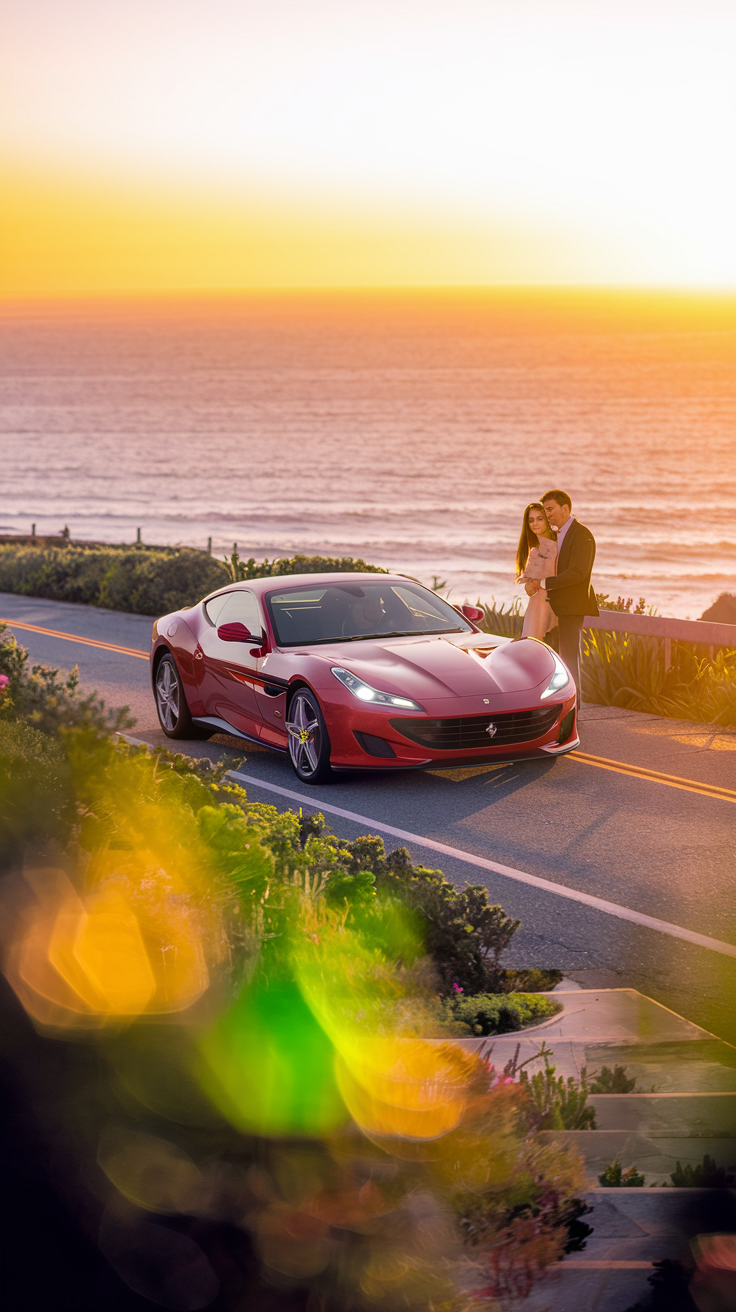
Like diamonds scattered across velvet, nighttime car photography offers a mesmerizing blend of chrome, glass, and atmospheric lighting that’ll make your Pinterest portfolio shine.
You’ll need more than just a good camera to capture those stunning automotive portraits after dark – it’s about mastering the delicate dance between technical skill and artistic vision.
Whether you’re shooting classic muscle cars or modern exotic machines, understanding the essential techniques will transform your night shots from ordinary to extraordinary.
Essential Camera Equipment for Night Car Photography

Success in night car photography hinges on having the right gear at your disposal. The Nikon D750 with a Sigma 50mm f1.4 lens delivers exceptional image quality for automotive night shots.
You’ll need a sturdy tripod to eliminate camera shake during long exposures, paired with fast lenses that excel in low-light conditions.
Don’t forget your remote shutter release to prevent unwanted movement when capturing those vital shots. For ideal results, you’ll want a camera with strong high-ISO performance and manual focus capabilities.
Include essential accessories like lens hoods to manage artificial light sources, and always pack extra batteries and memory cards – night shooting can quickly drain your resources.
Perfect Your Camera Settings for Low Light

While capturing stunning night car photos requires mastery of several elements, understanding your camera’s settings forms the foundation of successful low-light photography.
Start by switching to manual mode and shooting in RAW format for maximum control. Set your aperture wide (f/2.8 or wider) to let in more light, and adjust your shutter speed between 1″ and 1/60, depending on your subject’s movement. Using continuous drive mode can help increase your chances of getting sharp images.
You’ll need to balance ISO sensitivity (typically 1000-3200) with acceptable noise levels. A circular polarizer filter can help manage reflections from street lights and passing cars.
Mastering Light Painting Techniques

Mastering light painting opens up an entirely new dimension of nighttime car photography, transforming ordinary vehicle shots into enchanting works of art.
You’ll need a tripod, camera capable of long exposures, and various light sources to get started. For best results, wait until dark to begin your shoot to avoid unwanted ambient light affecting your exposures.
Walk around your subject while painting with light, varying the intensity and distance to create depth and dimension. Wear dark clothing and don’t forget to try different angles and movements – combining short pulses with continuous lighting can produce stunning three-dimensional effects that’ll make your car photos stand out.
Choosing the Right Location and Background

Selecting the perfect location and background for your nighttime car photography can make the difference between an ordinary shot and a masterpiece that enthralls viewers.
Look for urban settings with distinctive architecture or industrial areas that provide gritty contrast to your vehicle’s sleek lines. You’ll want to avoid distracting elements like power lines or trash bins, while seeking backgrounds that follow the one-color rule or offer striking contrast with your car’s paint. Utilizing a camera with fast sensor capabilities will help you capture clear, high-quality shots in these low-light urban environments.
Consider locations with interesting ambient lighting, such as marinas or historic districts, but always guarantee you’ve got proper permissions before shooting. Make sure to scout your chosen locations before sunset to plan your compositions and identify potential challenges in advance.
Creative Angles and Compositions That Stand Out

Getting creative with your camera angles and compositions can transform an ordinary nighttime car photo into a mesmerizing masterpiece.
Try shooting from ground level to emphasize your car’s powerful stance, or capture a rear quarter shot with the front wheel turned toward the camera for dynamic impact.
For balanced compositions, apply the rule of thirds by positioning key elements along these lines, and incorporate leading lines from roads or urban elements to guide viewers’ eyes.
Don’t forget to experiment with symmetry and negative space – these techniques will highlight your car’s design while creating depth in your nighttime images. Using a wide-angle lens will allow you to capture more of the surrounding environment while emphasizing the car’s dramatic features.
Professional Post-Processing Tips and Tricks

The artistry of night car photography truly comes alive in post-processing, where your raw captures transform into stunning visual statements.
Start by working with RAW files in Lightroom, adjusting white balance to eliminate unwanted color casts from artificial lighting. Fine-tune exposure and contrast to preserve details in both highlights and shadows. Powerful photo editors like Luminar NEO provide extensive tools for achieving professional results.
Dodge and burn tools can help you strategically lighten dark areas and darken overly bright spots for a more balanced look.
Enhance your car’s features using clarity and sharpening tools selectively, while applying noise reduction to maintain image quality. Utilize HSL adjustments to perfect individual colors, and consider selective editing to emphasize specific areas.
Safety Measures and Advanced Techniques

While mastering post-processing improves your night car photography, safety and advanced techniques go hand in hand to create truly spectacular shots.
Before you begin, scout your location during daylight hours and carry essential gear like a sturdy tripod and headlamp. You’ll want to maintain a safe distance from traffic while experimenting with slow shutter speeds of 30-60 seconds to capture stunning light trails.
Don’t forget to switch to manual focus and shoot in RAW format. For dramatic effects, try light painting with a flashlight or shooting from unique angles to emphasize your car’s best features. Setting your camera to burst mode can help you capture fleeting moments like dramatic exhaust flames during aggressive downshifts.